


Market Update: The world gets riskier
Hiatus in optimism
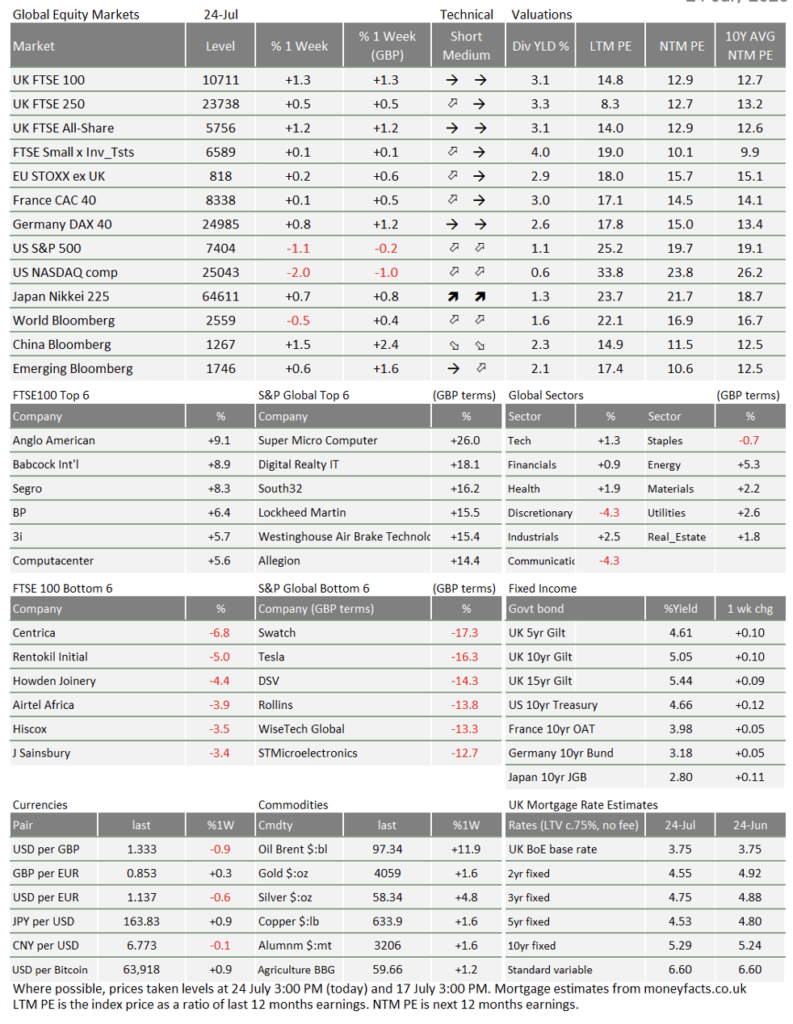
Equity and bond markets came under pressure last week, as oil prices rose above $100 per barrel again. The downside was clearest in bond markets, with long-term government yields moving up sharply. Stocks held up a little better in aggregate in the early part of the week, but all the risks around make them look increasingly fragile.
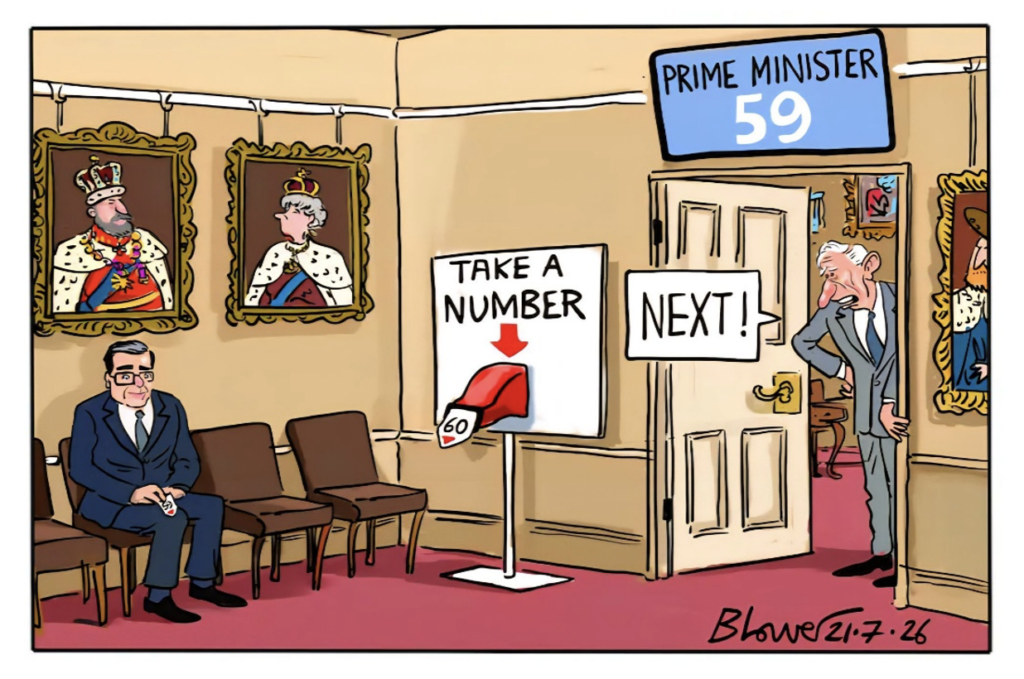
Rocky start for Burnham as global yields soar
We will call it an interesting first week in Number 10 for Andy Burnham. We usually try not to read too much politics into UK government bond (gilt) moves, but clearly his comments about using “any flexibility” in Labour’s fiscal rules were a factor in gilt yields rising faster than other bond markets at the start of the week.
It was interpreted as a signal of more borrowing, putting the Prime Minister on a bad early footing with gilt investors. Subsequently, there was lots of messaging about “fiscal discipline”. The appointment of John Healey, former Treasury Secretary under Gordon Brown, was seen as an implicit signal of spending control. The UK’s lower than expected 2.6% inflation figure for June also helped.
Still, bond yields are not falling, and the oil and gas spike means we cannot take much from backwards-looking economic data. Whatever Burnham and Healey do, the more important thing for gilts will be what happens in global bond markets.
Gilts were therefore not helped by sharp rises in US and Japanese bond yields. US yields rose because of higher oil and the continued resilience of US growth, with employment rebounding after a late spring soft patch.
AI infrastructure investment keeps driving that growth. Google owner Alphabet announced this week that its free cashflow was -$5.9bn in the second quarter, thanks to its exorbitant AI spending. With US tech giants borrowing and spending so much, broad US money supply is rising sharply, and now outpacing nominal GDP. Greater money supply combined with higher energy prices is a problem for the Federal Reserve, whose interest rate setters have made surprisingly hawkish comments (preferring higher rates) recently.
A rate cut seemed more likely than a hike as recently as April – when oil prices were even higher. Now, investors are nervous that the Fed could raise rates at its meeting next week. According to Bloomberg, markets’ implied hike probability has risen to 34%, from last week’s 10%.
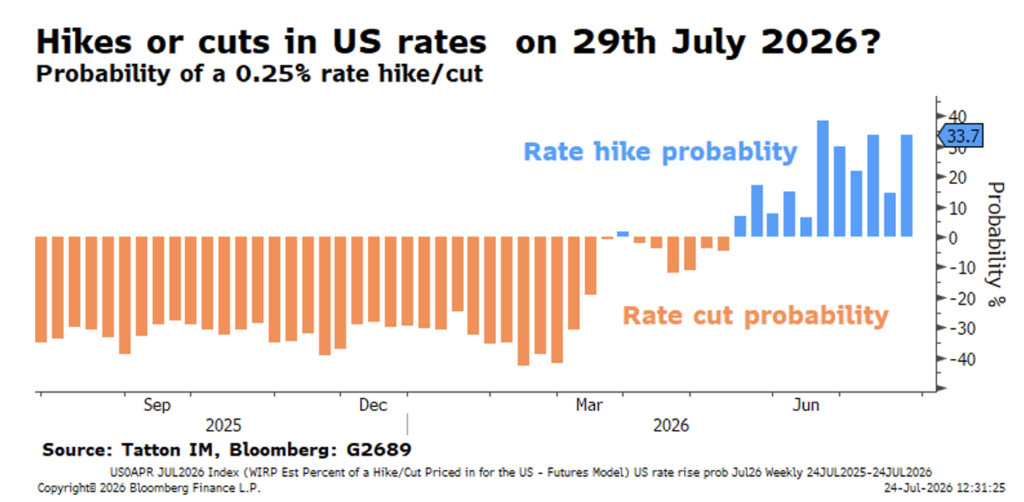
That still means a Fed hike is unlikely but, if it were to happen, it would be a serious challenge for markets. Equity investors have kept their calm amid recent turmoil, helped by easing liquidity conditions. A surprise rate hike could undo that.
Red Sea risks are badly timed
The prospect of energy price inflation is bad news for bonds. Soaring natural gas prices are even more important than oil, particularly in Europe. European natural gas prices have climbed over 50% since late June. At the same time, Europe’s gas storage is running at the lowest end of its seasonal range. That does not bode well heading into the winter.
The attacks that pushed oil over $100 per barrel were not in the Strait of Hormuz, but in the Red Sea. Saudi Arabia has rerouted much of its oil exports through the passage over the last few months, but two of its tankers were struck by Yemen’s Houthi militants on Thursday. Sluggish global oil demand had been holding back oil prices through the Iran war – but that balance can only hold if oil can flow through the Red Sea instead. If this area becomes another warzone, it could be a serious threat to the world economy.
However, that clear and present danger makes it more likely that Houthi attacks on oil tankers will be diminished as quickly as possible. The Yemeni group does not have the same attack capabilities as Iran; indeed, there has been only one day of attacks by the Houthis and they may be unable to mount any serious challenge to shipping. Nevertheless, it is being taken seriously. The US now has previously reluctant allies who agree that the attacks may need a response. The UK has joined US and Saudi operations against the Houthis in the past, and could be motivated to do so again. We do not know how successful such operations might be, but the Red Sea is not another Hormuz, at least.
The flare-up comes at the worst time for markets, though, just as the Fed turns more hawkish.
Tech anxiety isn’t all about oil
Aggregate stock prices were not hit as badly as you might expect by oil prices, but big tech stocks had a bad week. Shares in Tesla and Google owner Alphabet ended the week sharply down. In Alphabet’s case, that is despite smashing its earnings projections for last quarter. Earnings growth fuelled equity returns earlier this year, so Alphabet’s sell-off is a little strange. Could it just be referred pain from oil prices?
We think there is more to it. Investors are clearly nervous about the huge sums Silicon Valley is spending on AI. Even though Alphabet’s reported spend was not much higher than expected, its AI spending spree has transformed the company from a quality cash-rich stock to one that now burns through all its revenue and then some.
It is not purely about the amount of AI spending. Investors have come to accept that big US tech firms have to invest billions to keep up in the AI race. But they want to see proof that those billions are being invested in the best way to generate future returns. Doubts about monetising AI were heightened last week when Chinese firm Moonshot released another frontier AI model made for a fraction of what US firms spend.
Markets seem to be growing anxious about how the new AI tools might be used to generate hard profits – not just for tech companies but for the businesses they service. Where will the productivity benefits actually accrue, and how significant will they be in the end? From chip stocks to the so-called ‘hyperscalers’, investors are increasingly asking those questions. With so many risks around right now, those questions are harder to answer.
This week’s writers from Tatton Investment Management:
Lothar Mentel
Chief Investment Officer
Jim Kean
Chief Economist
Astrid Schilo
Chief Investment Strategist
Isaac Kean
Investment Writer
Important Information:
This material has been written by Tatton and is for information purposes only and must not be considered as financial advice. We always recommend that you seek financial advice before making any financial decisions. The value of your investments can go down as well as up and you may get back less than you originally invested.
Reproduced from the Tatton Weekly with the kind permission of our investment partners Tatton Investment Management
Who are Vizion Wealth?
 Our approach to financial planning is simple, our clients are our number one priority and we ensure all our advice, strategies and services are tailored to the specific individual to best meet their longer term financial goals and aspirations. We understand that everyone is unique. We understand that wealth means different things to different people and each client will require a different strategy to build wealth, use and enjoy it during their lifetimes and to protect it for family and loved ones in the future.
All of us at Vizion Wealth are committed to our client’s financial success and would like to have an opportunity to review your individual wealth goals. To find out more, get in touch with us – we very much look forward to hearing from you.
The information contained in this article is intended solely for information purposes only and does not constitute advice. While every attempt has been made to ensure that the information contained on this article has been obtained from reliable sources, Vizion Wealth is not responsible for any errors or omissions. In no event will Vizion Wealth be liable to the reader or anyone else for any decision made or action taken in reliance on the information provided in this article.
