


Market Update: Wanting isn’t getting…
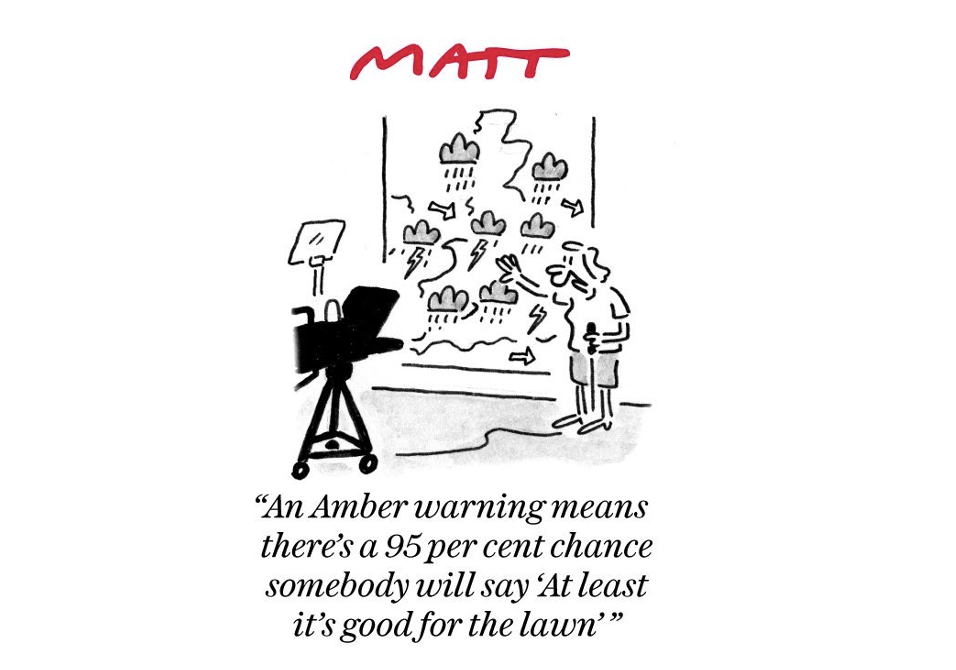
Tantrums and other 21st century resolution mechanisms
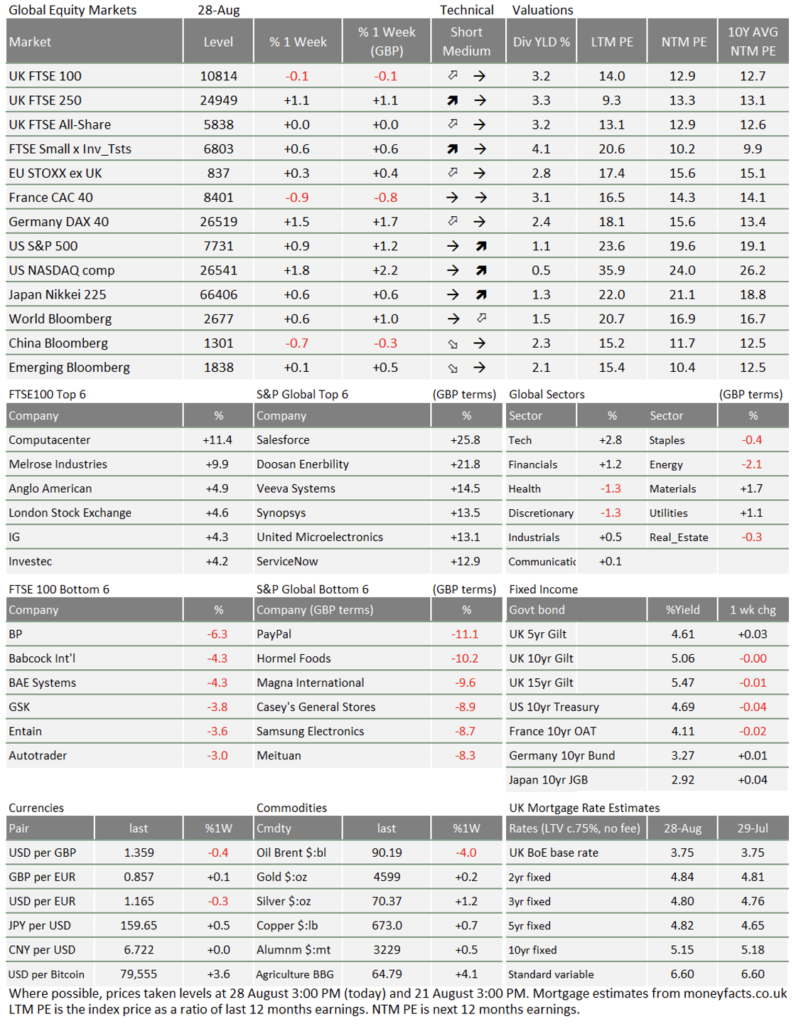
Last week saw little movement in the main asset classes. Generally, equity markets have moved a bit higher, longer bond prices and yields are unchanged and the US dollar has recouped much of the losses from the week before.
Kevin Warsh is delivering his address to the US Federal Reserve’s annual symposium of central bankers from around the globe, held at Jackson Hole, Wyoming. We will finish writing before he finishes his address but, so far, he has done a good job in communicating the reasons why Federal Open Market Committee members should be relatively uncommunicative. He has emphasised that returning inflation to the 2% target should be done with “speed” (although we point out below that he doesn’t need to do very much).
Short bond yields are a bit higher but longer maturities are currently unchanged, while Warsh is undoing some of the talk of “debasement” that happened after Bessent’s bond intervention of the week before last. Investors will be happy that currently he intends to set the inflation mandate ahead of the employment mandate – which is reasonable given the relative stability of employment.
However, the reason that short bond yields are up is that it is likely that the Fed will hike rates in September, given the Chairman’s remarks. While large cap stocks are up, small cap stocks have traded lower because of higher interest costs. Having “fired” Jerome Powell for not lowering rates, President Trump does not appear to be getting what he wants.
He did not mention the Federal Reserve’s bond holdings directly at all. We will have to wait for his task force whose recommendations “will come later”. They won’t affect the September or November FOMC decisions.
Economic data is sending a helpful signal for markets, in that growth is present but edging back from a pace that might add to inflation and force central banks to raise rates. For most regions, the year-on-year measures of inflation are still too high for comfort although these contain the Iran conflict’s jump in fuel prices. The price shock affects petrol pump prices pretty much immediately but can take longer to feed through the system in other areas; here in the UK, regulated household energy prices will rise by 4% for invoices after the end of September. It would have been more but for VAT being set at 0% (from 5%, with the lower rate only for six months) as wholesale prices have risen by 11% over a year.
However, the secondary impacts of oil and gas price rises are not as strong as were initially feared. In our “Back to School” Outlook for the rest of 2026, we note that the developed world’s core inflation, without the volatile and more importantly usually reversible food and energy price components, continues to edge down and is now running at about 2.4% year-on-year. This is still above the universal developed world central bank target of 2% (and each central bank has a slightly different measure of inflation) but the path is comforting. As for the level, the 0.4% “miss”, well it is equivalent to the 1997-2019 period’s average degree of deviation from the target, albeit that inflation was too low for much of the 2010-2019 period.
Given the consistently frequent shocks to the global system over the past decade, the strength of growth and the relative stability of inflation are remarkable and heartening. Perhaps the global system is far more robust than many thought.
There are good reasons why this could be so. We talk of extremely high global debt levels, but that discussion tends to focus on one part of the economy, governments. Generally, across the world both household and corporate debt has reduced substantially, relative both to the size of the economy and the total of all assets. Partly because of this low level of debt, the big rise in interest rates since 2021 has had a relatively low impact on consumers and businesses.
One theory of why government debt has risen so much is that it is the counterpart of the fall in household and corporate debt; the public sector has had to provide demand while the private sector built its net savings. Private sector growth and investment remained at low levels, and that allowed interest rates and bond yields to fall to extremely low levels – despite growing public debt levels.
However, since part way through last year and with greater momentum into this year, the private sector has stopped saving and is becoming a big spender via the AI-related and defence-related investment drive. While some fear the technology might be less productive than the believers say, history tells us that the investment drive will be long-lived even if it is likely to be bumpy rather than smooth.
The growth path should remain robust over the medium to long term and signs are that growth keeps surprising on the upside. Last week, for example, German Q2 GDP was revised up to 1% year-on-year while German confidence measures for both businesses and consumers were higher than forecasts. UK and US data are slowing from strong levels, but Europe and Japan are gaining from lower levels.
So what could go wrong?
The answer is that governments and their leaders may not have enough faith in the system’s ability to cope, or that they may want to protect weaker areas of the economy. They could also make mistakes which rock a system already damaged from previous shocks.
Last week, we mentioned that the US Treasury Secretary Scott Bessent had said the administration would bring forward a fiscal action plan within days, designed to reduce the government deficit meaningfully. He also intervened in the bond market, sending a clear signal that yields are too high for the world’s largest state to bear. Bessent has told us he is very worried about a potential acceleration in yield levels – a US “Doom Loop”.
On Monday, he announced Project Outcast which will impose as-yet unspecified tariffs on Iran’s trading partners as a means of sanction. Tariffs as a form of tax receipt are a valid way to increase government revenues and the 2025 “Liberation Day” tariffs did – at least temporarily – help reduce the year’s deficit.
However, as a policy, those tariffs were unsustainable in many different ways. Project Outcast tariffs will inevitably be less than 2025’s and will be unsustainable by design. In other words, Project Outcast was not the policy that Bessent was talking about. We don’t doubt, however, that this serious man is being serious and that he will deliver a plan.
The real danger is that weakened Republican senators and congressmen and women heading into mid-terms will welcome somebody else’s pain but not countenance their local electors to be squeezed – what will now be known as the Count Binface policy (“I’ll cut your taxes and raise everybody else’s”, not the one about “99 ice creams for 99p”).
Bessent may have created the circumstances of the very thing he fears by signalling urgent action is needed, and then not acting with urgency. He may be blocked from bringing anything substantive before the mid-terms and there is a lot that can happen in these two months.
Meanwhile, some of the global leaders seem intent on grabbing attention and, if their own aims require, convincing us that they will go to almost any end to achieve them.
President Trump may have been bounced into trade belligerence towards Canada by Howard Lutnick, U.S. Secretary of Commerce (just as Vance did in the meeting with Zelensky in 2025) but he seems happy enough to carry on with it. It appears that the US and Canada were very close to a deal before Lutnick’s involvement. This event may not have been a diplomatic slip-up on the US side, but the citizens of the US northern border (and important electoral vote-swing) states will be badly affected as much as those in Canada. A resolution seems likely.
Putin’s real belligerence towards Europe is also worrying on the face of it, and seems to have been the cause of the Head of the CIA’s visit to Moscow. Bloomberg and Reuters reported unnamed Putin insiders as effectively threatening “tactical nuclear” weapon use in Ukraine and possible attacks on Europe.
This certainly grabbed our attention but we note that such threats have been made before without leading anywhere. The threats of escalation are partly a signal of Russia’s pain and come with proffered paths to de-escalation, albeit ones which are not exactly attractive or easily accepted.
Brinkmanship doesn’t generally signal strength and mistakes can create the path that no one wants. The aim of playing up the “now not unthinkable” event is to skew the estimation of its probability. But the worst outcome is not substantially more likely because one party has said it. In fact, the probability of a path to resolution should also be increased, offsetting the risky scenario.
We’ve said before that geopolitics often has little impact on markets. It’s not that we think the news is unimportant, or that there is no downside. When people tell us what they want, often it is a way of getting something else, and bears little relationship to what will happen.
This week’s writers from Tatton Investment Management:
Lothar Mentel
Chief Investment Officer
Jim Kean
Chief Economist
Astrid Schilo
Chief Investment Strategist
Isaac Kean
Investment Writer
Important Information:
This material has been written by Tatton and is for information purposes only and must not be considered as financial advice. We always recommend that you seek financial advice before making any financial decisions. The value of your investments can go down as well as up and you may get back less than you originally invested.
Reproduced from the Tatton Weekly with the kind permission of our investment partners Tatton Investment Management
Who are Vizion Wealth?
 Our approach to financial planning is simple, our clients are our number one priority and we ensure all our advice, strategies and services are tailored to the specific individual to best meet their longer term financial goals and aspirations. We understand that everyone is unique. We understand that wealth means different things to different people and each client will require a different strategy to build wealth, use and enjoy it during their lifetimes and to protect it for family and loved ones in the future.
All of us at Vizion Wealth are committed to our client’s financial success and would like to have an opportunity to review your individual wealth goals. To find out more, get in touch with us – we very much look forward to hearing from you.
The information contained in this article is intended solely for information purposes only and does not constitute advice. While every attempt has been made to ensure that the information contained on this article has been obtained from reliable sources, Vizion Wealth is not responsible for any errors or omissions. In no event will Vizion Wealth be liable to the reader or anyone else for any decision made or action taken in reliance on the information provided in this article.
