


Market Update: Risks take a holiday
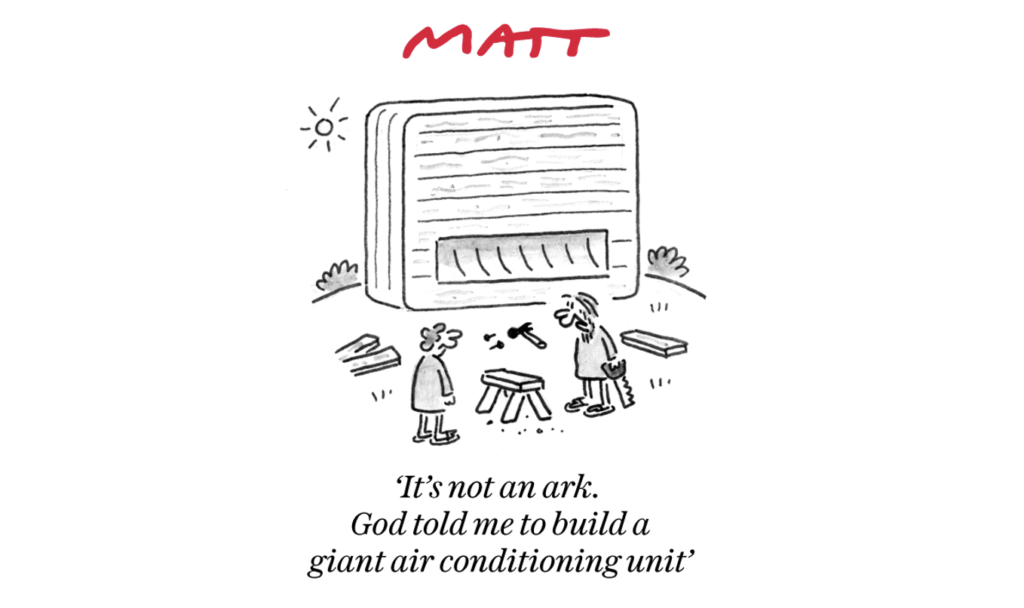
Hot weather, chilled markets
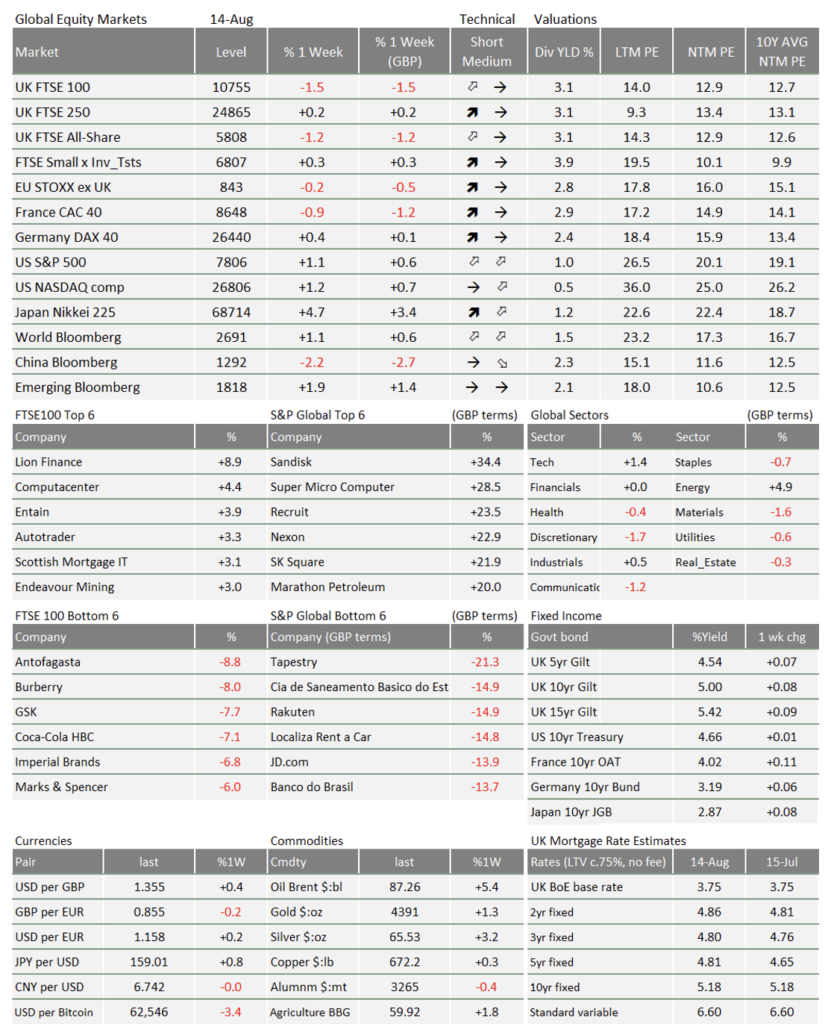
Capital markets had another decent week, led by US tech stocks and propelled by AI-related corporate earnings reports. How many times have we written that sentence? The market-moving narratives are basically the same as they have been for weeks: strong tech earnings, receding energy price fears and lingering anxiety around high government bond yields.
The difference between July’s volatility and August’s calm is less about the fundamental outlook and more about investor sentiment. Markets have remained liquid through the light summer period, while many retail investors with leveraged positions were flushed out during July’s sell-off in chip manufacturing stocks. Since then, prices have drifted higher on strong fundamentals. The risks are still there but the rewards are too. Markets are what you make of them.
Are tech earnings a duck or a rabbit?
Two news stories contributed heavily to AI stocks’ outperformance last week.
The FT reported that Claude owner Anthropic is looking for an eye-watering $2 trillion valuation in its initial public offering (IPO), likely in October. SpaceX’s reign as the largest-ever IPO ($1.765 trillion market cap on 11th June) will be over.
AI cloud computing firm CoreWeave released strong Q2 results, comfortably beating revenue forecasts – though its bottom-line losses expanded, due to a higher capital spending forecast. CoreWeave shares gained 19% in Wednesday trading, buoying broader US tech stocks.
It is interesting that markets responded so well to CoreWeave’s ‘spend money to make money’ report. These were exactly the kind of results that the so-called AI hyperscalers (Alphabet/Google, Amazon, Meta/Facebook, Microsoft and Oracle) were punished for last month, as investors grew anxious about vast AI spending. Where investors once saw worrying levels of cash-burn, they now see AI firms investing while they are ahead. It is the typical ‘duck or rabbit’ illusion.

Strong earnings or cash-burn?
The change in perspective is, we suspect, down to improved market liquidity. The US-Japan intervention to support the yen is estimated to have injected close to $100 billion of dollar liquidity into the financial system at the start of the month. Benign inflation figures since have reduced the chances of interest rate hikes and loosened financial conditions further. And while oil prices are still high, the Middle East’s market impact has dulled, with investors buying back into equities.
A liquidity boost reduces the gap risk in stock markets, lowering share price volatility – both in recorded and implied terms (the cost of insuring shares against price falls). When volatility falls, investors feel more comfortable buying risk assets.
UK growth can’t bridge the narrative gap
Having had a good run through July, UK markets no longer share the glass-half-full mood. UK stocks underperformed last week, despite stronger-than-expected economic growth in June (the UK is one of a few who publish monthly as well as quarterly real growth estimates).
The ONS also published its 2026 second quarter growth estimates and these too were surprisingly strong, given higher oil and gas prices, with strong business investment growth being particularly encouraging. For the quarter, real growth rose an annualised 1.7%.
The commentary downplayed the overall UK growth numbers, suggesting they were a one-off bounce from a weak business investment position in Q4 last year, over budget uncertainty. Consistently weak business sentiment might back that up, but the fact remains that Britain’s economic data has been consistently stronger than the surrounding narrative for some time.
We will have to see how the data holds up in the second half of 2026 to know for sure. But in any case, the UK economy looks reasonably well supported. Inflation pressures are dissipating and company earnings are strong. If the green shoots of private sector investment can be matched by public investment – a big if – then that should support growth further.
One negative you could pull out of the UK data is that growth is being led by business demand – widening an already stretched trade deficit (exports minus imports). If that demand is investment-related, you might expect it to create stronger exports later on, thereby narrowing the trade deficit. But we cannot know yet. Regardless, it is a slight concern not a massive one.
Another potential negative, for mainland Europe even more than the UK, is the impact of recent extreme heat levels. Hot weather has boosted consumption in some sectors but reduced manufacturing and agriculture production, while transportation problems are adding up. The UK may see a marginal impact of about -0.2 to -0.3% for 2026, while Germany and France could see growth pulled down by -0.5% to -1%, according to various sources.
Strong sentiment but risks remain
The global market backdrop looks good, with strong earnings growth, inflation pressures abating and returning investor risk appetite. But investors being in a good mood does not mean the risks have gone away.
On Wednesday, the International Energy Agency (IEA) increased its estimated global oil shortfall for the rest of 2026 and warned that dwindling reserves might be insufficient if supply stays disrupted. The IEA has made dire predictions about the US-Iran war before, and markets have become a little numb to them. But the longer the Strait of Hormuz remains only “sort of open”, the more likely they will come true eventually. Markets’ sensitivity to oil supplies has changed, but the underlying situation has not.
Numbness to oil prices also limits the chance of a relief rally if oil supplies improve. You would expect bond yields to fall if energy prices drop, for example, but AI firms’ demand for capital could simply mean that lower yields just incentivise more borrowing. That would limit the upside for bond prices (the inverse of yields).
So far this month, markets have been happy with more of the same. But we are approaching an event that could definitively change the mood: the Jackson Hole conference for central bankers from around the world, at the end of August. There, new Federal Reserve Chair Kevin Warsh may give some clues about his plan to wean markets off the central bank liquidity provision they have enjoyed for nearly two decades. Given that strong liquidity is keeping spirits high, those plans will be crucial for markets.
This week’s writers from Tatton Investment Management:
Lothar Mentel
Chief Investment Officer
Jim Kean
Chief Economist
Astrid Schilo
Chief Investment Strategist
Isaac Kean
Investment Writer
Important Information:
This material has been written by Tatton and is for information purposes only and must not be considered as financial advice. We always recommend that you seek financial advice before making any financial decisions. The value of your investments can go down as well as up and you may get back less than you originally invested.
Reproduced from the Tatton Weekly with the kind permission of our investment partners Tatton Investment Management
Who are Vizion Wealth?
 Our approach to financial planning is simple, our clients are our number one priority and we ensure all our advice, strategies and services are tailored to the specific individual to best meet their longer term financial goals and aspirations. We understand that everyone is unique. We understand that wealth means different things to different people and each client will require a different strategy to build wealth, use and enjoy it during their lifetimes and to protect it for family and loved ones in the future.
All of us at Vizion Wealth are committed to our client’s financial success and would like to have an opportunity to review your individual wealth goals. To find out more, get in touch with us – we very much look forward to hearing from you.
The information contained in this article is intended solely for information purposes only and does not constitute advice. While every attempt has been made to ensure that the information contained on this article has been obtained from reliable sources, Vizion Wealth is not responsible for any errors or omissions. In no event will Vizion Wealth be liable to the reader or anyone else for any decision made or action taken in reliance on the information provided in this article.
