


Market Update: Market jitters
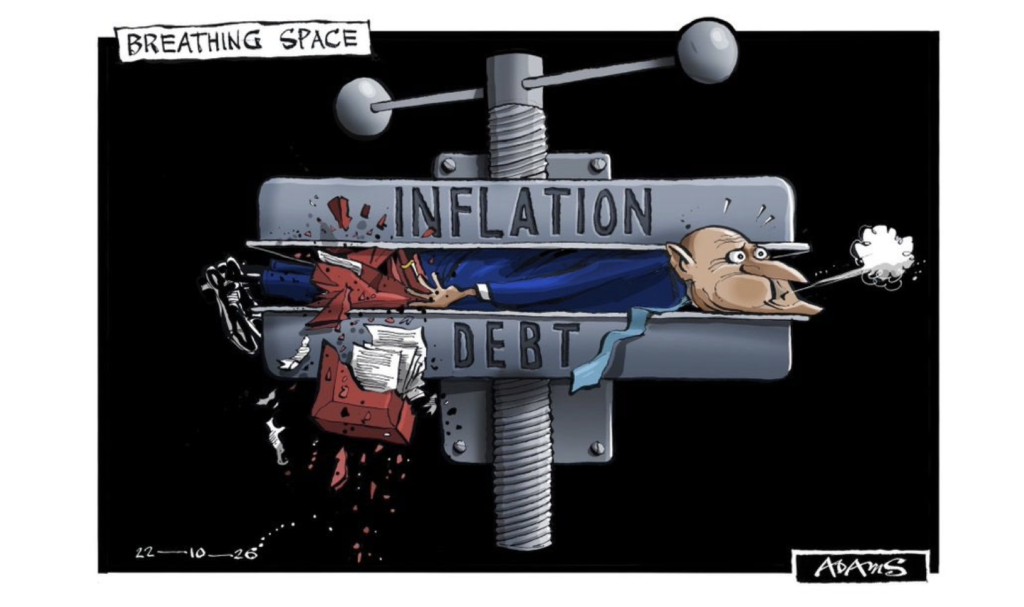
The sentiment gap
Fears over the AI giants’ debt levels has the sceptics leading market sentiment, yet growth is good, creating a gap between business fundamentals and a sense that it’s all too good to be true.
Who’s using AI?
Considering AI is all about data, there isn’t much actual data on AI itself to explain the negative narrative, so we look into what data there is to see who is using AI, and for what.
China’s Japanification is a monetary problem
The decades long stagnation of the Japanese economy is an unwelcome reflection of the problems facing China’s government, and what it can do to reverse the slump.
The sentiment gap
Global stocks were recovering well from last week’s sell-off – then took another plunge on Thursday. AI-related firms again dominated the narrative. Despite strong quarterly earnings results, Meta’s expected AI investment plans renewed fears about unsustainable, debt-fuelled AI growth. Investors are increasingly nervous that the profit growth that has fuelled markets for years cannot go on forever. Why these doubts are creeping in right now is not clear; underneath the noise, the fundamentals for stocks are still improving.
Pessimism or healthy scepticism?
It feels like the media narrative about an AI bubble supposedly waiting to burst has reached fever pitch. We think that is less about last week’s events, and more about commentators catching up with stories markets have been mulling over for a while. There were several warning stories about higher prices and increased demand for tech firms’ credit default swaps (CDS – the cost of insuring a corporate bond against default). Datacentre construction firm CoreWeave, whose unsecured bonds are officially distressed (defined as 10 percentage points above US government bond yields), is at the centre of the concerns.
CDS spikes are scary because they evoke memories of the opaque financial engineering that collapsed during the 2008 global financial crisis. But, even if tech companies’ debt problems get significantly worse, we are a long way from 2008. Banks’ debt back then was interconnected and opaque in a way we do not see today. Barclays’ Ajay Rajadhyaksha pointed out on Monday that, even for the much-discussed CoreWeave, only some of its bonds are distressed. These unsecured bonds form just a small part of the company’s overall funding pile.
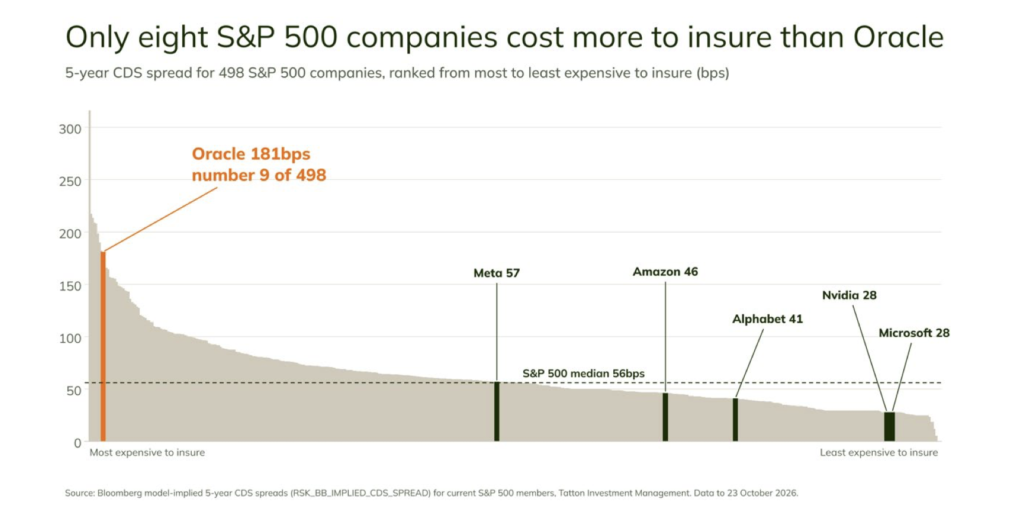
Even if CoreWeave did go bust entirely, that would not by itself endanger the AI investment boom. It is true that many big tech firms hold debt or equity in other tech firms (Nvidia and OpenAI both have stakes in CoreWeave) but it is still a small piece of the puzzle. CDS prices and credit spreads (the difference between corporate bond yields and US government yields) have increased for tech companies more broadly, but to nothing like the level of highly indebted CoreWeave. The big Silicon Valley names still have significantly lower credit spreads than the average S&P 500 company.
That brings us to our usual rebuke of the AI bubble narrative: it is certainly not a bubble in the classic sense of exuberant price-to-earnings valuations. Earnings growth has even outpaced share prices this year, so valuations have fallen. Previously, we tempered that good news by pointing out that higher real (inflation-adjusted) government bond yields and corporate credit spreads made valuations less attractive than you would otherwise think. But now, yields have fallen and, in the past week, credit spreads have been fairly stable – all while share prices are falling. In other words, even on a relative basis, stocks really have become cheaper.
Yields fall but fiscal fears remain
Most government bond yields fell even lower into the end of last week – led by the US 10-year yield sneaking just below 5% for the first time in weeks. The one major exception to this yield relief is France: French bond yields have now broken above 5%. This looks like fiscal anxiety from bond investors. France’s government budget has now been delayed until November amid political opposition and national unrest. With little sign of a financial or political way out, ratings agency Moody’s is reportedly considering downgrading France’s credit rating.
Yields on UK government bonds (gilts) did fall slightly, but not quite as much as the US. Stubbornly high gilt yields are a major headache for Chancellor John Healey ahead of a difficult autumn budget, causing a steady climb in UK debt repayments. Britain’s economic data was also mixed – the week before last’s surprising growth numbers tempered by last week’s higher-than-anticipated inflation – which effectively confirmed an interest rate rise from the Bank of England.
Healey has very little room to manoeuvre: Labour MPs are against spending cuts, while the party’s 2024 manifesto promised no tax rises (which is partly why there is speculation about an early election). All the while, higher interest repayments eat into the fiscal headroom. There is speculation about targeted taxes on banks, but there is also a growing feeling that the budget might be a non-event in the end. All things considered, it would seem that the speculative cohorts in UK markets are holding still on UK assets until after the budget.
Risks dent investor sentiment
Lower yields and ever-stronger corporate earnings (third quarter US earnings are on track to beat even Q2’s strong growth) are supportive for share prices. And yet, last week’s sell-off, together with the media’s AI doom stories, shows investors are not feeling supported. Why the sentiment gap?
There is certainly no shortage of scare stories. The highly publicised PHP cybersecurity vulnerability – which resulted in websites being temporarily taken down across the world – probably unnerved many corporate managers. Advanced AI tools have intensified the race between would-be hackers and cybersecurity protocols, meaning that costly security upgrades will probably become more common (on the flipside, that could be a gain for cybersecurity companies).
Oil prices keep rising too. Brent crude’s rise above $110 per barrel – close to its post US-Iran war peak – has gone strangely unremarked upon, but that does not make high energy prices any easier to stomach. The spike itself is a little strange, considering the Wall Street Journal report that more oil is flowing out of the Middle East now than before the war began. Oil markets seem to be tightening up on the rumour that the US will launch another large attack on Iran just after the midterm elections. We should probably treat these rumours with caution, but there is no denying that Washington and Tehran look as far from resolution as ever.
Perhaps the scare stories are heightening the sense that double-digit earnings growth cannot be sustained forever. So, while there might not be an AI bubble in valuation terms, some think there is a bubble in AI earnings growth itself. The timing is odd, considering the latest earnings reports continue to prove that growth – but that is sometimes just the way sentiment goes. As long as actual earnings growth keeps up the pace, and especially if bond yields keep falling, we should expect to see sentiment rebounding eventually.
This week’s writers from Tatton Investment Management:
Lothar Mentel
Chief Investment Officer
Jim Kean
Chief Economist
Astrid Schilo
Chief Investment Strategist
Isaac Kean
Investment Writer
Important Information:
This material has been written by Tatton and is for information purposes only and must not be considered as financial advice. We always recommend that you seek financial advice before making any financial decisions. The value of your investments can go down as well as up and you may get back less than you originally invested.
Reproduced from the Tatton Weekly with the kind permission of our investment partners Tatton Investment Management
Who are Vizion Wealth?
 Our approach to financial planning is simple, our clients are our number one priority and we ensure all our advice, strategies and services are tailored to the specific individual to best meet their longer term financial goals and aspirations. We understand that everyone is unique. We understand that wealth means different things to different people and each client will require a different strategy to build wealth, use and enjoy it during their lifetimes and to protect it for family and loved ones in the future.
All of us at Vizion Wealth are committed to our client’s financial success and would like to have an opportunity to review your individual wealth goals. To find out more, get in touch with us – we very much look forward to hearing from you.
The information contained in this article is intended solely for information purposes only and does not constitute advice. While every attempt has been made to ensure that the information contained on this article has been obtained from reliable sources, Vizion Wealth is not responsible for any errors or omissions. In no event will Vizion Wealth be liable to the reader or anyone else for any decision made or action taken in reliance on the information provided in this article.
