


Market Update: Back to fundamentals
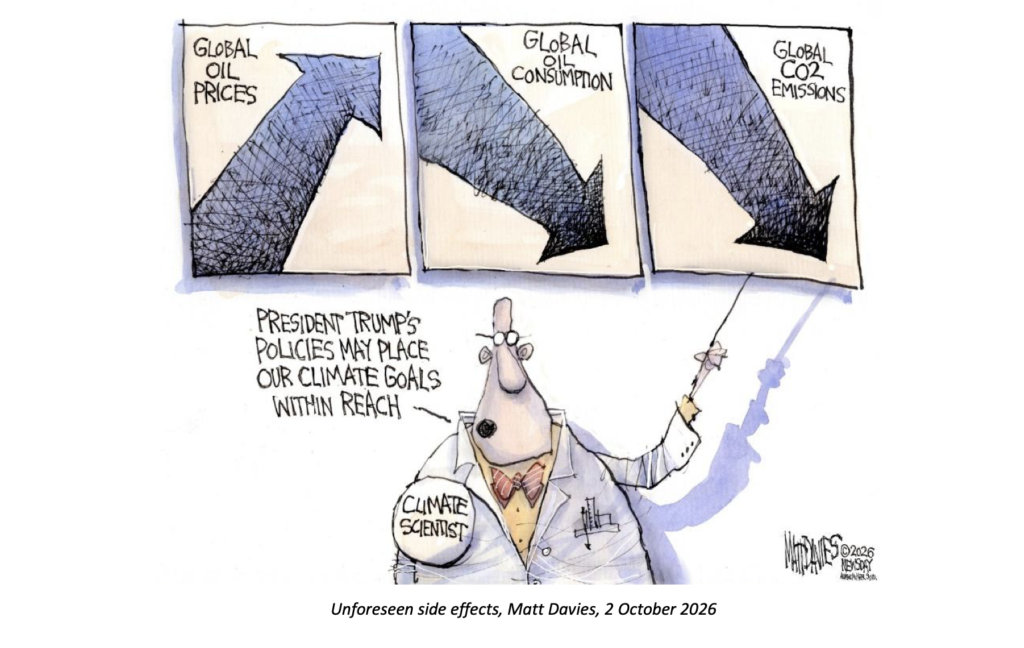
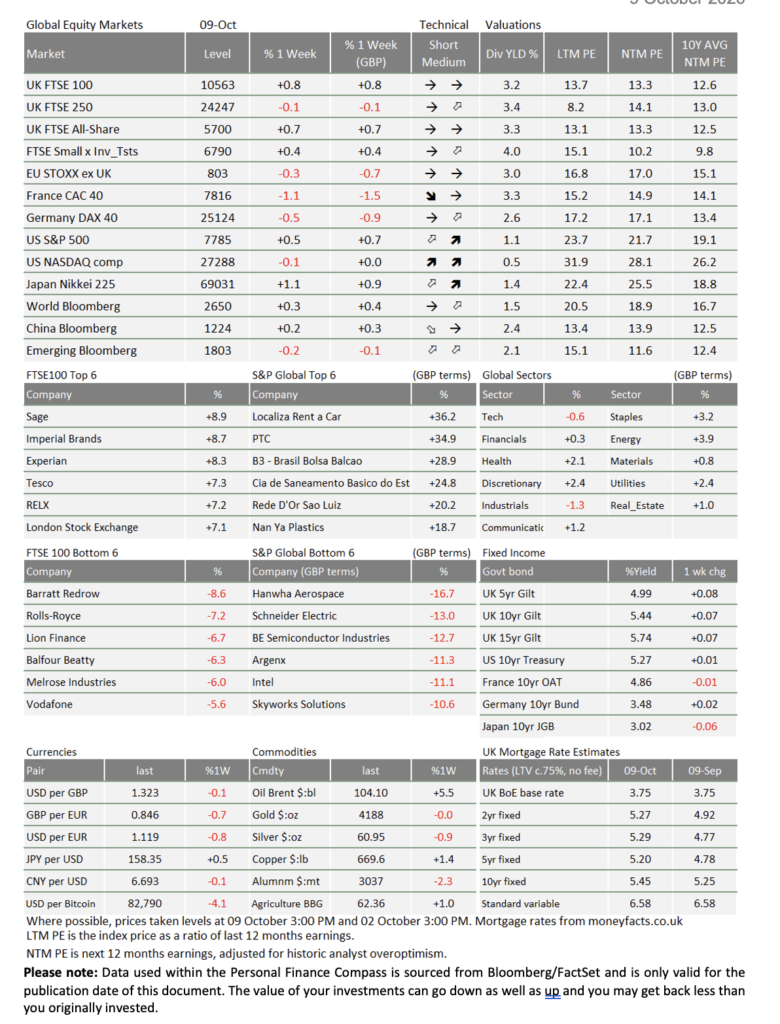
US tech stocks continue to dominate market moves – but even they did not have an especially strong week. Markets are a little nervous that big tech’s extraordinary earnings growth might have peaked. Those nerves led to volatility on Thursday and Friday, following an apparent misunderstanding of OpenAI’s revenue figures (more on that below), but tech stocks mostly recovered. The recovery shows how optimistic investors are about the AI theme, but the whole episode shows that this optimism partly relies on some poorly understood figures about AI growth.
The nervous mood is partly because equity investors are looking over their shoulders at bond markets. Long-term government yields keep creeping higher – or jumping, in France’s case. How high can they go before investors are lured out of their equity holdings?
Getting over the hurdle?
Higher ‘risk-free’ government bond yields should, theoretically, make stocks less attractive by comparison. Over the last few months, however, global stocks have been virtually flat – despite yields soaring. Equity holders are not selling their stocks to buy bonds, making each asset class’s base of investors look entrenched. We have argued before that yields will probably have to cross a high hurdle rate before that changes.
There are whispers that yields might now be close to, or even above, that hurdle rate. Long-term inflation-linked UK bonds, for example, now offer a quite attractive return above inflation (around 2.6% for 20-year maturity inflation-linked bonds) and, unlike equities, those returns are government-guaranteed. We have heard anecdotal evidence that short-term credit instruments are struggling to attract capital, as 10-year US inflation-linked yields of 3.2% plus inflation look too good to pass up.
To be clear, this is not hitting share prices yet – and it might never, given that AI growth is expected to drive tech stock gains much higher than 3% above inflation over the long term. The AI investment thesis is supposed to be separate from the usual economic cycle of growth, yields and interest rates. But even if AI optimism does not depend on it, the cycle can certainly complicate the story.
Yields hurt stocks through credit stress
On Thursday, the Financial Times reported that ChatGPT maker OpenAI’s annualised revenue is running at $50bn, below “expectations” of $70bn. Investors took that as a sign of slowing demand for computing power, so chip manufacturer stocks sold off. The story’s source then quickly said that the FT had essentially misunderstood the technicalities of OpenAI’s metrics, leading to a revenue miscalculation. Tech stocks then regained almost all of their losses. Still, the fact that so much of markets’ AI optimism depends on industry-specific metrics of ‘compute’ revenue growth is slightly disconcerting.
Higher bond yields heighten these tensions. Not only do they make equity price-to-earnings valuations less attractive, but they also dampen future growth prospects and raise debt costs. We can see this now in sharply higher credit spreads – the premium corporate borrowers have to pay above the government. There were similar, though larger, spikes after Donald Trump’s “Liberation Day” tariffs in 2025, and after the US-Iran war started (see chart below). But those were sudden geopolitical shocks, whereas this has been a gradual rise in government bond yields that has hit spreads all at once.
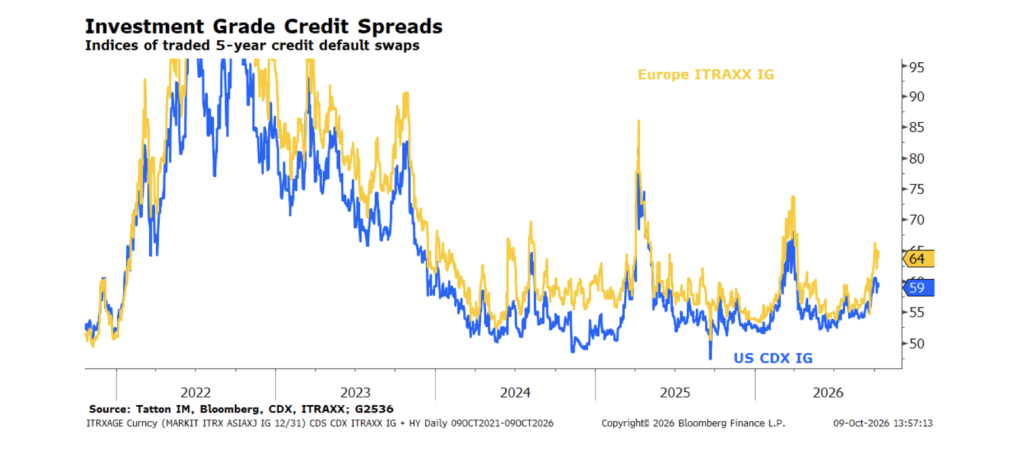
Credit spreads were also hurt by SpaceX’s announcement of another $40bn in corporate bond issuance. Investors have started to dislike that big tech firms keep borrowing, even as borrowing costs rise. Those concerns raise the risk premium (the amount investors demand for a given level of risk) on additional lending, which can feed other worries in a vicious cycle.
We should point out that the underlying signals of credit look okay. Default rates have risen somewhat but there is no sign of widespread stress. Markets recovered well the last two times credit spreads spiked, so we do not want to overstate the problem.
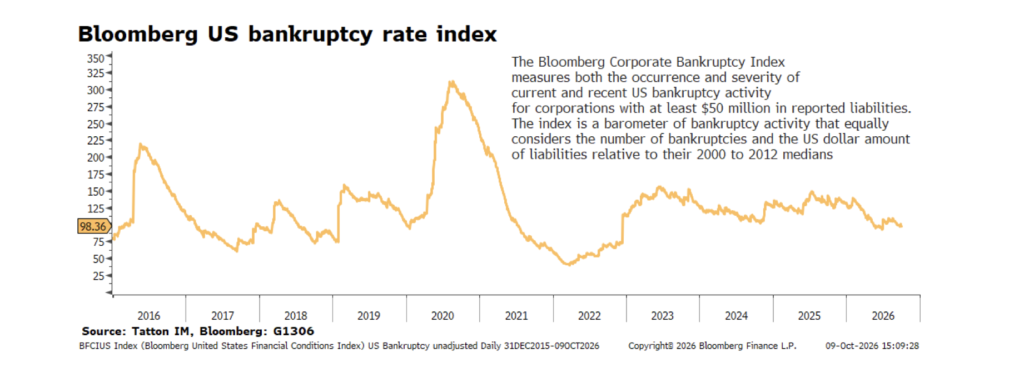
As the inherently pessimistic media point out, however, it could worsen. High credit spreads put pressure on price-to-earnings valuations as the cost of finance rises and business activity slows. We write in a separate article about how AI’s strength might be coming at the expense of everyone else. If AI stocks themselves come under pressure (they still pay much lower-than-average credit spread premiums), that could make investors extremely nervous. The bearish risk is that this creates a reverse wealth effect: consumers (especially Americans) are so heavily invested in stocks that share price falls might slow consumer spending.
Hope for good news to fix fragile sentiment
Whether or not such deterioration happens largely depends also on market liquidity conditions. Liquidity dried up somewhat over the summer, as central banks have signalled higher interest rates. Higher credit spreads are another sign of tight liquidity, as is Bitcoin’s recent drop. Liquidity both influences and is influenced by investor sentiment – so we should hope nothing else spooks investors.
Enter, geopolitics. Aside from the usual flashpoints (US-Iran, Russia-Ukraine and potentially China-Taiwan), there are potentially impactful elections coming in Spain, France, Israel and Brazil – not to mention the US midterm elections. There were some suggestions this week that Trump’s Republican party might resort to election denialism if it suffers defeat next month. As we wrote last week, any attempt to overturn US election results would not be good for US bonds, or the dollar.
Thankfully, the upcoming third-quarter corporate earnings season should counter those worries and fuel share prices – given surprisingly strong economic growth in recent months. The vast sums tech firms have raised, but not yet spent, should support liquidity too. There are some signs that businesses’ demand for AI tokens might be plateauing, but we doubt this will affect Q3 earnings reports. That demand might increase anyway, as new AI assistants like Meta’s Muse use up computing capacity and add to revenues.
In any case, you could argue that markets are already pricing in slower growth: earnings growth has been faster than share price gains this year, so valuations have fallen. And if growth weakens, that suggests yields should fall back to less worrying levels. In recent weeks, this tug-of-war between growth and yields has put stock markets on notice, to either keep delivering earnings growth or stop rising. Investors will watch the coming earnings season even more closely, to see if growth slows any more than is already priced in.
This week’s writers from Tatton Investment Management:
Lothar Mentel
Chief Investment Officer
Jim Kean
Chief Economist
Astrid Schilo
Chief Investment Strategist
Isaac Kean
Investment Writer
Important Information:
This material has been written by Tatton and is for information purposes only and must not be considered as financial advice. We always recommend that you seek financial advice before making any financial decisions. The value of your investments can go down as well as up and you may get back less than you originally invested.
Reproduced from the Tatton Weekly with the kind permission of our investment partners Tatton Investment Management
Who are Vizion Wealth?
 Our approach to financial planning is simple, our clients are our number one priority and we ensure all our advice, strategies and services are tailored to the specific individual to best meet their longer term financial goals and aspirations. We understand that everyone is unique. We understand that wealth means different things to different people and each client will require a different strategy to build wealth, use and enjoy it during their lifetimes and to protect it for family and loved ones in the future.
All of us at Vizion Wealth are committed to our client’s financial success and would like to have an opportunity to review your individual wealth goals. To find out more, get in touch with us – we very much look forward to hearing from you.
The information contained in this article is intended solely for information purposes only and does not constitute advice. While every attempt has been made to ensure that the information contained on this article has been obtained from reliable sources, Vizion Wealth is not responsible for any errors or omissions. In no event will Vizion Wealth be liable to the reader or anyone else for any decision made or action taken in reliance on the information provided in this article.
