


Market Update: Assuming growth will win
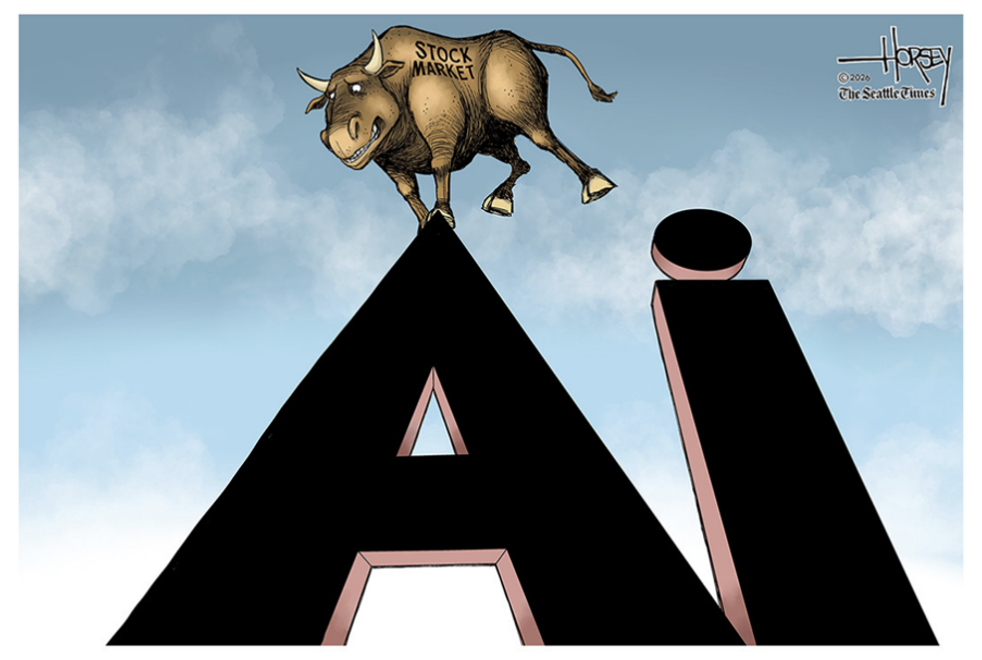
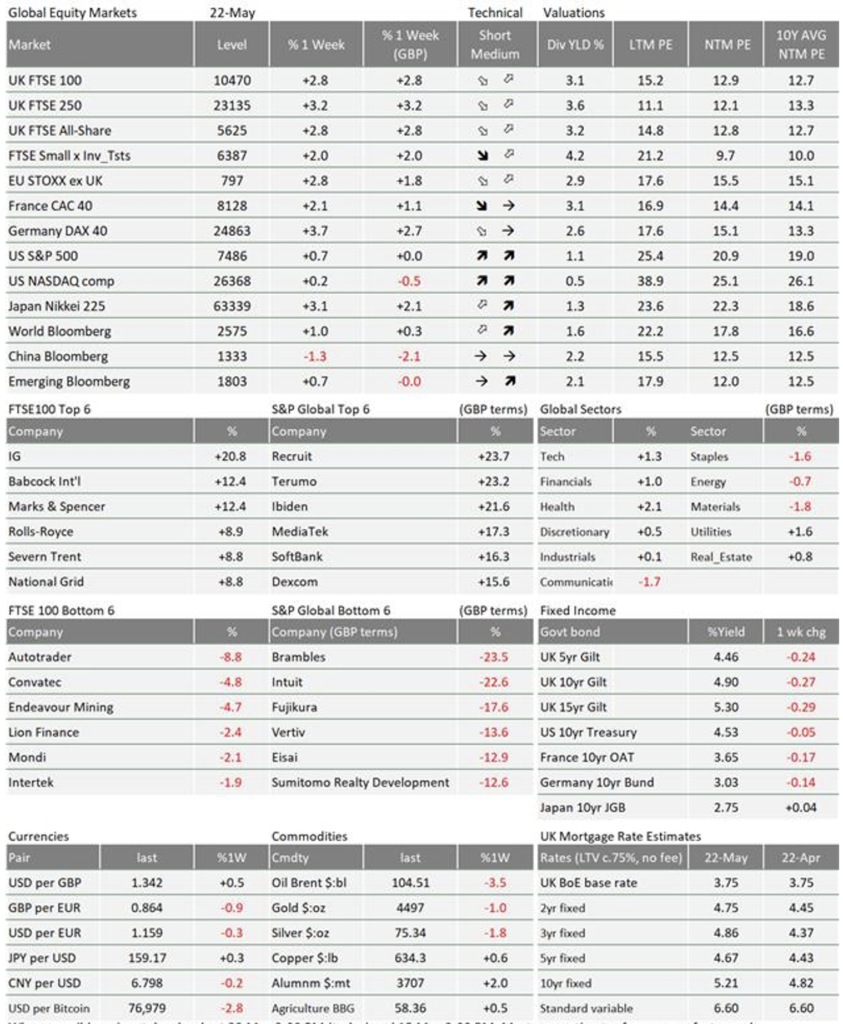
Global stocks and global bonds ended last week positively, with the gains coming mostly in non-US markets. This was the first week since the end of March that big US tech stocks have underperformed. That underperformance comes despite continued strong results from the likes of Nvidia. Meanwhile, European government bonds did well; prices rose (and so yields fell), especially in the UK. That is not enough to counteract the sharp yield rise over the last two months, so the sense of market fragility remains. Still, last week was a very welcome respite.
Tech companies are demanding more and more capital, firstly to cover the ever-growing spend on AI and secondly to blast us into space. That current spend should lead to future profits, but belief and optimism will have to be maintained if markets are to make progress right now.
Investors unfazed by Nvidia’s profits
Not all tech stocks struggled last week: Korea’s KOSPI index gained over 8% on Thursday, following a midweek tumble, thanks to star chipmakers Samsung and SK Hynix. But the big US names came under pressure, exemplified by Nvidia. The world’s most valuable company was down over 3.8% through last week.
It may seem incredible that Nvidia’s share price dip came after it announced an 85% jump in revenue for the three months to April, beating already massive expectations. The chipmaker also announced $80bn in share buybacks and bumped up its quarterly dividend – resulting in one of the highest corporate payouts ever. Nvidia has eye-watering profit growth and is giving that money back to shareholders. And yet, investors are less interested than a week ago. How can that be?
One explanation might be that stellar profit growth is already ‘priced in’ for the tech giant. Over the last two years, Nvidia’s share price performance has consistently been soft in the weeks following earnings announcements. Optimism and interest start to build again with about eight weeks before the next earnings announcement – a case of ‘buy the rumour, sell the fact’.
For the broader set of tech companies, there is another factor at play. The wave of AI investment keeps growing, and while this may not (yet) apply to Nvidia, it is now clearly eating into the money once used for share buybacks. The money to build datacentres has to come from somewhere. A few months ago, we saw massive corporate bond issuance. Now, big tech is increasingly funding their spend through equity issuance.
Musk’s rocket to the moon demands capital
The best example of this is the upcoming IPO of Elon Musk’s SpaceX. SpaceX wants to raise around $75bn at a staggering valuation of up to $1.75tn – despite currently making just $19bn in revenue a year, with pedestrian growth. The company covers satellites (Starlink – the profitable global internet via satellite consumer proposition), rocket launches, social media (X – formerly Twitter) and AI – but CEO Musk promises it will eventually build a million-strong colony on Mars. With a suggested IPO date of the 4th of July, Musk certainly knows how to sell US retail investors ‘a rocket ship to the moon’.
SpaceX is just the first of several trillion-dollar company IPOs planned for this year, with OpenAI and Anthropic also expected to list in the coming months. Absolute Strategy Research estimate that these offerings will add around $210bn worth of fresh equity onto the US stock market. That alone would be the largest amount of new equity ever raised. It would probably be added to as employees release some of their holdings – as often happens in the months after IPOs.
We have not seen such intense demand for equity capital, relative to the size of the overall stock market, since the dotcom bubble in the late 1990s and early 2000s. And unlike debt issuance, which can ultimately be fuelled by banks creating credit, this equity issuance will have to be absorbed by new money coming to the stock markets, i.e. funded out of savings.
Even if you believe in these companies’ ability to make profits (which looks risky, in the case of SpaceX), we are heading into a market with less capital, relative to stocks on offer. That might become a challenge for equities.
Inflation pushes up yields, but they are attractive
The other aspect of the big AI spend is that it is undeniably adding to inflation. Techno-optimists can promise all the cost-saving future productivity gains they like but, right now, the demand for materials is compounding the global energy price spike. New Federal Reserve chair Kevin Warsh is one of those AI productivity optimists. But over the coming months he will have a hard time convincing himself, let alone his colleagues, that interest rates should fall. Indeed, betting market odds suggest that a rate rise in the US is now likely before the end of the year.
The AI investment spree is sustaining growth – and not just US growth – even if consumers might not feel that way. We see this particularly in the UK, where manufacturers are surprisingly upbeat (with strong quarterly outlook statements), but consumers and therefore many service companies are struggling.
The recent inflation uptick has been one of the drivers behind the other big destabilising force for markets: higher bond yields, which, in turn, are making equity price-to-earnings valuations less attractive. We would argue that the inflation impact on bonds is more about what it means for government borrowing, rather than inflation itself.
Bond investors have been bruised in recent weeks. But as we keep saying, for long-term investors who want a secure return, high bond yields look attractive. Demand is solid in primary bond auctions, particularly in the UK. The Debt Management Office reopened the current 10-year gilt issue with £4bn of new bonds, which went well last week. It was helped by the main prime-ministerial candidates bowing to the fiscal rule totem, as well as soft economic data. It may take a while for calm to filter through to secondary bond markets. And, as last week has shown, calmer UK bond markets tend to support UK equities.
This week’s writers from Tatton Investment Management:
Lothar Mentel
Chief Investment Officer
Jim Kean
Chief Economist
Astrid Schilo
Chief Investment Strategist
Isaac Kean
Investment Writer
Important Information:
This material has been written by Tatton and is for information purposes only and must not be considered as financial advice. We always recommend that you seek financial advice before making any financial decisions. The value of your investments can go down as well as up and you may get back less than you originally invested.
Reproduced from the Tatton Weekly with the kind permission of our investment partners Tatton Investment Management
Who are Vizion Wealth?
 Our approach to financial planning is simple, our clients are our number one priority and we ensure all our advice, strategies and services are tailored to the specific individual to best meet their longer term financial goals and aspirations. We understand that everyone is unique. We understand that wealth means different things to different people and each client will require a different strategy to build wealth, use and enjoy it during their lifetimes and to protect it for family and loved ones in the future.
All of us at Vizion Wealth are committed to our client’s financial success and would like to have an opportunity to review your individual wealth goals. To find out more, get in touch with us – we very much look forward to hearing from you.
The information contained in this article is intended solely for information purposes only and does not constitute advice. While every attempt has been made to ensure that the information contained on this article has been obtained from reliable sources, Vizion Wealth is not responsible for any errors or omissions. In no event will Vizion Wealth be liable to the reader or anyone else for any decision made or action taken in reliance on the information provided in this article.
