


Market Update: Trump in China and Starmer in peril
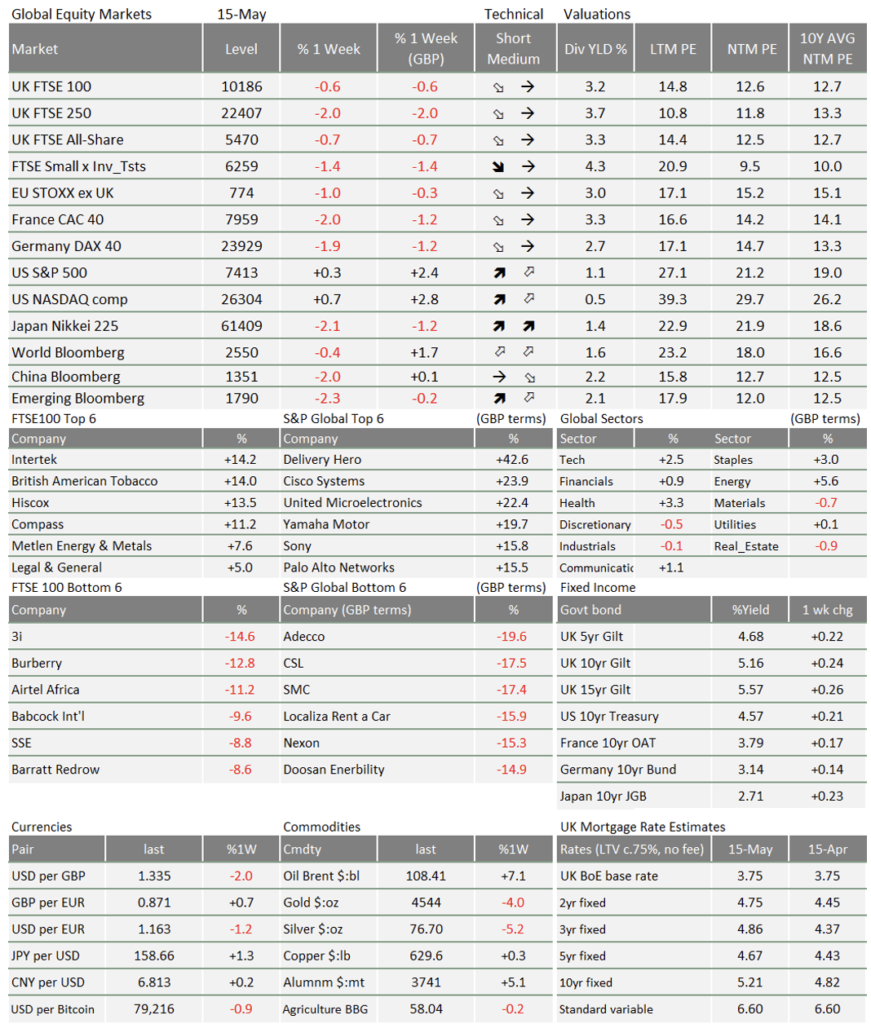
The Bloomberg World Equity index was up 1.5% in sterling terms at the close of last week, although virtually all of that gain comes from US stocks and a stronger US Dollar. Donald Trump’s high-profile visit to China had no notable surprises, which helped stock prices. However, while Trump suggested that China may help reopen the Strait of Hormuz, there did not appear to be significant progress in resolving the Iran conflict, and China did not confirm US statements. President Xi did at least say Washington and Beijing should be “partners, not rivals” and, this afternoon, China confirmed it will take part in a “Board of Trade” as well as a “Board of Investment”. That was well received by markets.
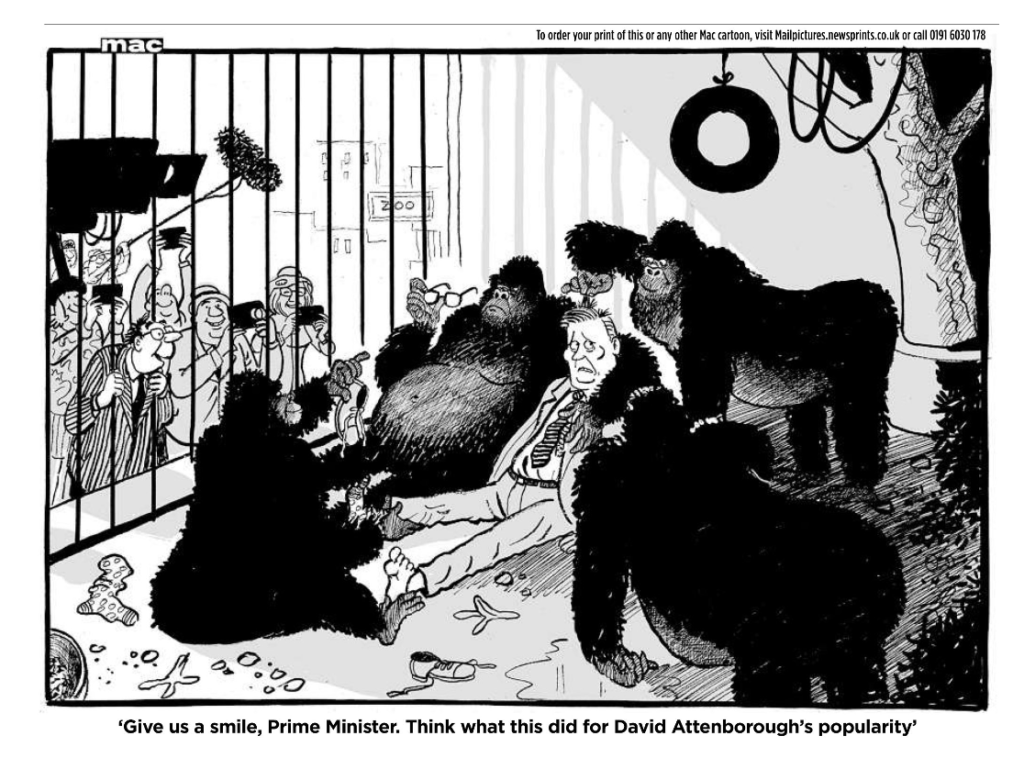
Bonds were particularly volatile in the early part of last week – and not just UK bonds. For UK bonds (gilts), the narrative has been dominated by handwringing over Keir Starmer’s premiershipwith the UK 10-year gilt yield briefly dropping below 5% on Thursday but is back to around 5.16% at time of writing.
Investors watch falling gilt prices rather than rising returns
Up until Friday morning, gilts had outperformed other government bonds – albeit after several weeks of underperformance. We stand by our assessment that gilt yields are higher than others because of structurally weak demand, rather than politics per se. One of those demand deficiencies is the Bank of England’s net bond sales, which we discuss in a separate article.
Gilt struggles should be put in the context of broader bond volatility, even if that is no comfort to investors. More comforting is the fact that relative bond volatility (in terms of the effect of yield percentage point changes affecting price changes) decreases as yields go up, in purely mathematical terms (known as “convexity”). Total bond returns are also supported by the payouts from higher yields. Basically, high government yields are attractive for long-term investors – even if short-term bond traders worry about volatility.
If you think government finances will collapse, or volatility will stay so high for so long as to make even long-term bond holdings unattractive, then you will disagree that bonds are good value even at these levels. Some worry that fiscal expansion from a potential new Labour leader could do exactly that. Andy Burnham worries gilt investors the most, having said that he would expand the government deficit – but we can only speculate how much more debt would result.
Even if Burnham becomes leader, we struggle to see how UK debt and deficit metrics could get anywhere near as stretched as the US, for example. The UK government deficit was at 4.3% of GDP and falling in March whereas the US deficit is at 5.8% and rising again. And because the risks have been clear for some time, it means that investors are already pricing them into the market. The bond vigilantes are already getting paid.
Structurally weak gilt demand puts our bond market at the mercy of short-term traders. But the long-term demand is growing – evidenced by the success of recent gilt sales by the government. We are not saying prices cannot fall further; obviously, they can. But we are saying yields are likely to mean long-term investors will get a return well above inflation.
A resource squeeze?
Inflation is part of the bond market fear – not helped by higher inflation figures last week. There are also intense supply pressures on metals like copper and silver, as well as certain tech goods.
The AI infrastructure spending spree is creating huge demand for metals. China is currently importing as much silver as it can get its hands on, with silver likely to become a key electricity component. Even if the world gets over the Iran shock, metals and energy demand could keep inflation high.
Bond managers are also worried about how central banks might respond to inflation. Friday wasJerome Powell’s last day as Federal Reserve chair – set to be replaced by the supposedly dovish Kevin Warsh. We have heard concerns that central banks might abandon their informal (or in some cases, formal) 2% annual inflation targets, which have anchored bond yields for decades.
We see that as unlikely. Few central banks are signalling a laxer approach to inflation, with some already raising rates. The 2% target might be rethought eventually – for good reason – but it is not at risk right now.
Nice view from the (Trump-Xi) summit
It is heartening that global growth has been resilient throughout the US and Israel’s war on Iran, even if strong growth compounds inflation. The flipside of the AI corporate spending spree is that manufacturers are doing very well – with strong business sentiment surveys virtually everywhere.
We have even seen a pickup in global job postings, backing up recent jobless claims data from the US and dispelling any notion of an AI-fuelled job drought. Jobs are less abundant in the UK and Europe but, even in the UK, growth is surprisingly strong, as shown by recent GDP figures (showing the economy grew an annualised 2.4% in the first quarter of 2026) and despite endless commentary suggesting otherwise.
For the world economy, the final piece of the puzzle would be reigniting China. After a long period of stagnant growth, data from the world’s second-largest economy shows progress. The government is eager to spend – proven by its silver imports – but the stumbling block has so often been whether Beijing can fire up domestic Chinese demand.
We suspect that came up during Trump’s visit to China. We are disappointed at the lack of concrete progress towards a resolution on ending the US’ war on Iran, but both the US and China seem aligned on resuming oil and gas flows as quickly as possible. Getting more out of China, whether that is building US factories or prompting Chinese consumers to buy more US products, has been a core part of Trump’s agenda for a decade. Helpfully for US-China relations, Beijing wants Chinese consumers to buy more too.
This week’s writers from Tatton Investment Management:
Lothar Mentel
Chief Investment Officer
Jim Kean
Chief Economist
Astrid Schilo
Chief Investment Strategist
Isaac Kean
Investment Writer
Important Information:
This material has been written by Tatton and is for information purposes only and must not be considered as financial advice. We always recommend that you seek financial advice before making any financial decisions. The value of your investments can go down as well as up and you may get back less than you originally invested.
Reproduced from the Tatton Weekly with the kind permission of our investment partners Tatton Investment Management
Who are Vizion Wealth?
 Our approach to financial planning is simple, our clients are our number one priority and we ensure all our advice, strategies and services are tailored to the specific individual to best meet their longer term financial goals and aspirations. We understand that everyone is unique. We understand that wealth means different things to different people and each client will require a different strategy to build wealth, use and enjoy it during their lifetimes and to protect it for family and loved ones in the future.
All of us at Vizion Wealth are committed to our client’s financial success and would like to have an opportunity to review your individual wealth goals. To find out more, get in touch with us – we very much look forward to hearing from you.
The information contained in this article is intended solely for information purposes only and does not constitute advice. While every attempt has been made to ensure that the information contained on this article has been obtained from reliable sources, Vizion Wealth is not responsible for any errors or omissions. In no event will Vizion Wealth be liable to the reader or anyone else for any decision made or action taken in reliance on the information provided in this article.
